Annapurna Circuit Trek – 11 Days
Annapurna Circuit Trek Highlights
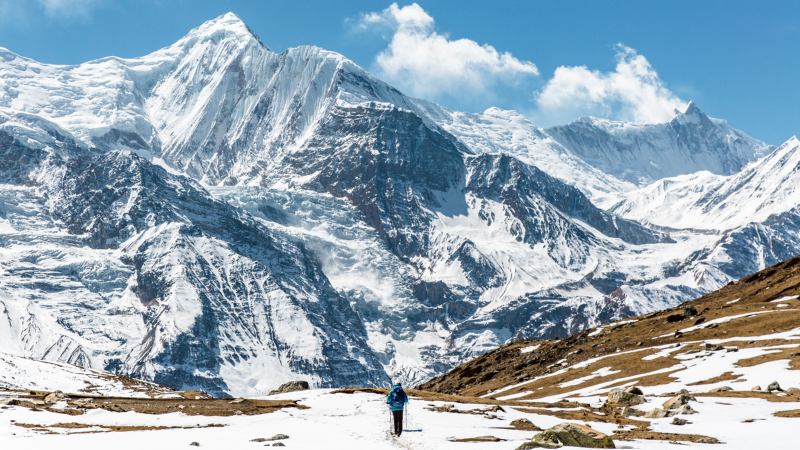
- Traverses through the Annapurna Conservation Area, offering stunning mountain views
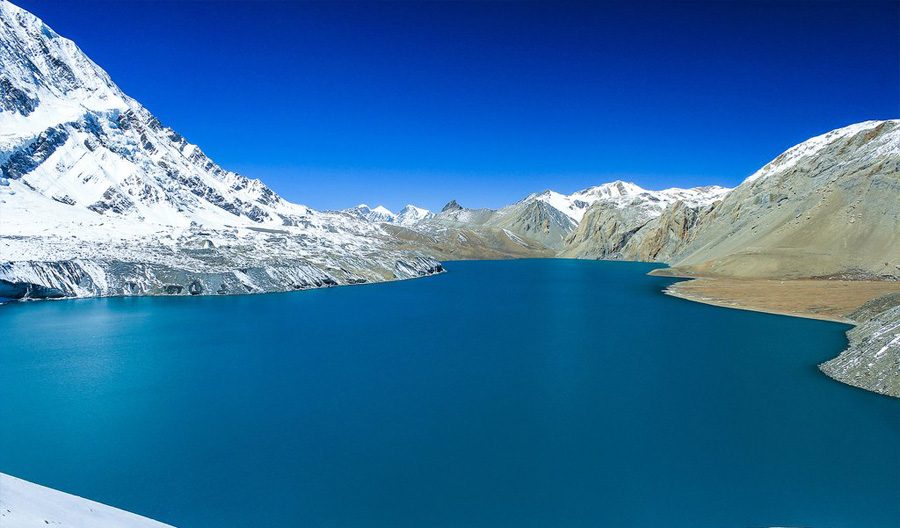
- Captivating vistas of peaks like Annapurna II (7,937m), Manaslu (8,163m), and Tilicho (7,134m)
- Walk through gorgeous landscapes of terraced fields, forests, icy glaciers, and more
- Explore ancient Tibetan Buddhist settlements with centuries-old monasteries.
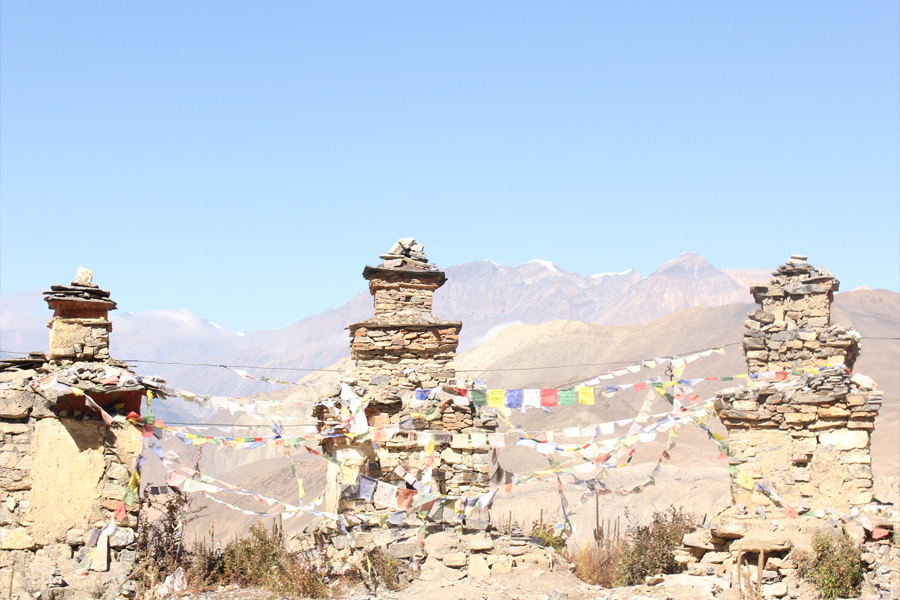
- Discover historic stone carvings, prayer walls, and chortens
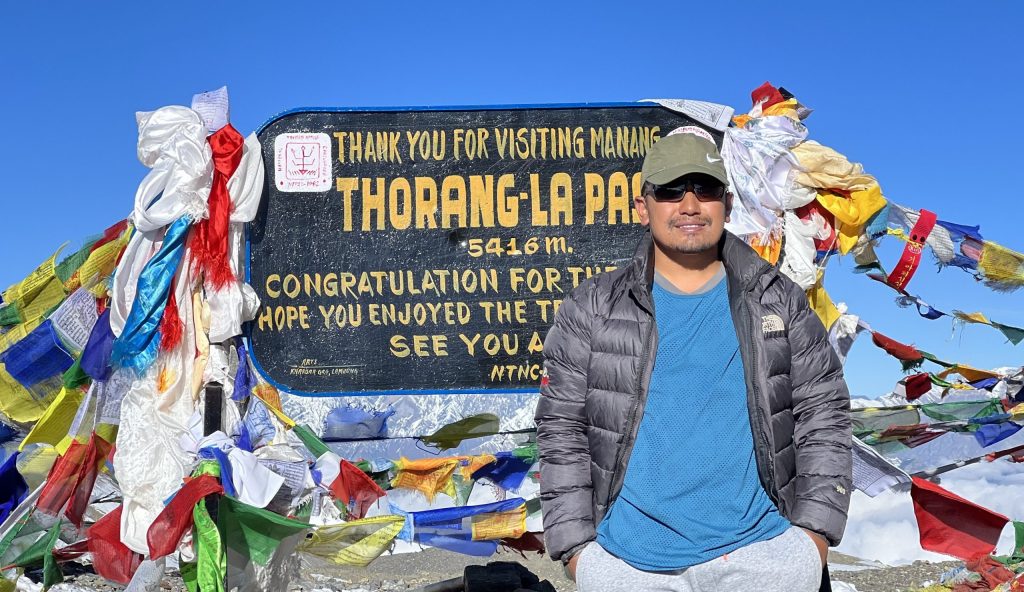
- Cross the high Thorong La pass (5,416m), a challenging yet thrilling day trek
- The revered spiritual destination of Muktinath Temple, a site of deep religious significance.
- Immerse in the vibrant cultures and warm hospitality of the Gurung, Magar, and Manangi people
Trip Information
The famous Annapurna Circuit trek takes place in the mighty Annapurna mountain range of north-central Nepal. This popular trek circles counterclockwise through the stunning Annapurna region, offering hikers amazing natural scenery and cultural sights along the way.
Regarded as one of Nepal’s classic treks, the route showcases dramatic gorges and remote high mountain passes while following trails of Annapurna Conservation Area. Moreover, astonishing viewpoints, natural hot springs, Buddhist and Hindu temples, charming villages, and jaw-dropping views of the Annapurna peaks are the major highlights.
The thrilling 10-day Annapurna Circuit is an ideal adventure for trekkers seeking a rewarding challenge amidst some of the most breathtaking and towering peaks on the planet. For many, it’s the ultimate trekking destination. Our Annapurna Circuit itinerary is carefully designed to aid with altitude acclimatization by building in a few extra rest days. This helps prevent altitude sickness.
Since the Annapurna trek reaches elevations around 5,000 m, your body will need enough carbohydrates, protein, and nutrition. While you’ll be provided healthy food, options are more limited than in cities. So be mindful of your diet and eating habits. With amazing scenery, cultural encounters, and a world-class challenge, the legendary Annapurna Circuit trek is an epic journey through some of Nepal’s most beautiful landscape that will create lifelong memories.
Itinerary
Max. Altitude: Chame (2,630 m) Meals: Breakfast, Lunch, Dinner
Our Annapurna adventure begins early as we depart Kathmandu on a local bus, eager to watch the landscape unfold. Settling in for the ride to Besisahar, we'll pass through charming hillside villages and marvel at the lush forests and terraced fields decorating the rolling foothills.
Glimpses of the icy pinnacles of the high Himalayas promise more to come! After lunch in bustling Besisahar, we'll switch to a jeep for the rugged but scenic drive to Chame, nestled amidst pine woods.
Max. Altitude: Pisang (3,300 m) Meals: Breakfast, Lunch, Dinner
On this day, the adventure takes us from Chame to Pisang, treating us to magnificent Himalayan vistas and charming hillside villages. We'll wander quiet trails through pine forests and across flower-filled meadows to reach settlements like Bhratang and Dhikur Pokhari.
We can pause to chat with the friendly locals and learn about their way of life. After soaking up the peaceful atmosphere at the Pisang Monastery, we'll make our way up to the Upper Pisang viewpoint and be rewarded with jaw-dropping panoramas of the surrounding snow-capped giants. This diverse hike shows us the region's many faces.
Max. Altitude: Ngawal (3,657 m) Meals: Breakfast, Lunch, Dinner
After fuelling up in Pisang, the trek kicks off by crossing a swaying suspension bridge over the azure Khumi Khola River. We'll steadily make our way up stone steps through juniper and pine forests, catching glimpses of snowy peaks between the trees.
Emerging into alpine meadows at Ghyaru, we're rewarded with unobstructed views of the entire Annapurna range in all its glory. Descending through yak pastures and villages, we enter the tiny settlement of Ngawal in time for a well-deserved late lunch.
Max. Altitude: Manang (3,370 m) Meals: Breakfast, Lunch, Dinner
After breakfast in Ngawal, we descend on switchbacks through pine and juniper forests to meet the raging Marsyangdi River. As the trek advances, the sparse Trans-Himalayan terrain transforms the scenery as we approach bewitching Manang, nestled in a wide valley bounded by Annapurna ranges.
Meals: Breakfast, Lunch, Dinner
We devote this day to exploring Manang, starting with an early morning hike up to Gangapurna Lake to take in the awe-inspiring views of the surrounding peaks - Annapurna III, Tilicho, Pisang, and Chulu. We wandered through the charming Manang Village and its Buddhist monasteries.
The vistas from Manang village are stunning, with the increased elevation providing clearer views of the soaring mountains and Gangapurna glacier. We'll pause to sit and absorb the scenery, though the intense winds require careful navigation back down the mountainside.
Max. Altitude: Yak Kharka (4,110 m) Meals: Breakfast, Lunch, Dinner
Today, we will depart from the road and ascend to considerably higher elevations. Our route takes us from Manang up to Gunsang, where the sweeping mountain views will leave you breathless. We will continue trekking through alpine meadows and cross the Thorung Khola River via a suspension bridge before arriving at Yak Kharka. Expect around 5 hours of hiking between Manang and Yak Kharka.
Max. Altitude: Thorang Phedi (4,450 m) Meals: Breakfast, Lunch, Dinner
Upon departing Yak Kharka, we will hike up to a ridge before making our way down to the source of the Marsyangdi River and crossing via a covered wooden footbridge. We will follow a narrow trail over an unstable, rocky slope and then arrive at Thorung Phedi after a brief uphill trek on the right bank of the mountain path.
Max. Altitude: Thorong La Pass (5,416 m) Meals: Breakfast, Lunch, Dinner
Today our trek leads us from Thorang Phedi up to the sacred Muktinath Temple by way of the high Thorang La Pass, situated at 5416m. Due to the potential for strong winds, it's best to cross earlier in the day. Locals have used this trail for centuries to transport sheep and yaks between Manang and Muktinath. Though often steep, the well-worn path is easy to follow.
From the Thorung La pass, marked by traditional prayer flags, we will be rewarded with spectacular vistas of the Annapurnas, Gangapurna, and the heavily glaciated Khatung Kang.
As the terrain levels out, we will descend through verdant fields and meadows to reach Muktinath, meaning "place of nirvana," home to the renowned Muktinath Temple and monasteries. It is said that visiting this sacred pilgrimage site for both Hindus and Buddhists can lift one's sorrows.
Max. Altitude: 1190 m Meals: Breakfast, Lunch, Dinner
The most challenging hiking portion of the trek concluded as the path levels out, following the flow of the Kaligandaki River towards Jomsom. In contrast to the remote mountain trails, Jomsom is a bustling town.
As we journey by vehicle, the scenery shifts dramatically from barren highlands to verdant forests. Tatopani, renowned for its healing natural hot springs, offers a chance to unwind in the warm mineral waters. Local lore touts the anti-inflammatory and anti-fungal properties of the springs in Tatopani.
Meals: Breakfast, Lunch, Dinner
Today, we journey from Tatopani to the popular tourist destination of Pokhara. As you draw nearer to the city, prepare to be awestruck by the natural beauty surrounding it. You'll have the option to visit some of the nearby attractions before spending the evening enjoying nightlife in Pokhara.
Pokhara is well-equipped with amenities for travelers. It's recommended to go sightseeing around Pokhara and plan where to enjoy a nice meal, likely craving your favorite foods after so long on the trail.
Whats Included
Whats Excluded
INCLUDED
- Airport pick-up and drop-off by private vehicles.
- 2-night hotel accommodation with breakfast in Kathmandu (3-star).
- 2-night hotel accommodation with breakfast in Pokhara (3-star).
- Twin-sharing accommodation during the trek.
- All necessary trekking permits.
- Experienced government-licensed English-speaking guide and associated expenses.
- Porter services (1 porter for 2 trekkers).
- Three meals each day during the trek as per the menu.
- Duffel bag provided during the trek (must be returned).
- Trekking map and a certificate of trekking achievement.
- First aid medicine kit (personal medicines recommended).
- Government taxes.
EXCLUDED
- Accommodations for early arrival or late departure in Kathmandu or mountains due to flight delays or cancellations.
- Personal travel/trekking insurance.
- International airfare.
- Alcoholic drinks and beverages.
- Single rooms in the mountain are not included.
- Snacks and personal expenses are not included.
- Wi-Fi internet and phone calls, unless free, are not covered.
- Tips for trekking guides, porters, and drivers (tipping is expected).
- Any other expenses not mentioned in the inclusive services section.
FAQ
The optimal times to trek the Annapurna Circuit are spring (March to May) and autumn (September to November).
The weather tends to be more stable during these seasons with sunny days and cold nights. The skies are clearer providing excellent mountain views. Temperatures are moderate at lower elevations but can get quite cold at higher altitudes. There is also less likelihood of monsoon rains compared to the summer months.
The winter months (December to February) can be quite cold with snow and may obstruct certain mountain passes. Monsoon season between June and August brings heavy rain, clouds, and leeches, making the trek more challenging.
The Annapurna Circuit has a good network of local lodges and teahouses that offer basic accommodation for trekkers. These single-room stone/brick lodges are simple but comfortable with common bathrooms. Some places now have attached toilets. Most provide dorm-style beds with blankets; carry your own sleeping bag liner.
Though some fancier lodges have expanded options, the menu is largely Nepali staples like dal-bhat-tarkari, pasta, and momos. Most places accept cash only. Power supply may be limited to charge devices. The lodges are spread out at intervals along the circuit trail making long distances manageable.
Having a professional local guide for the Annapurna Circuit trek is not mandatory but highly recommended, especially for less experienced trekkers.
Guides are familiar with the routes, altitude sickness prevention, weather patterns, best teahouses to stay, and can help you safely acclimatize.
For solo trekkers, a guide provides much valued companionship and support through challenging sections. Guides help connect you to local culture. The additional cost of a guide usually enhances the overall trekking experience.
There are 2 main permits required for the Annapurna Circuit trek: TIMS card (Trekkers Information Management System) and ACAP (Annapurna Conservation Area Project) permit. These permits can be obtained in Kathmandu at the Nepal Tourism Board office prior to starting the trek. Have passport photos and photocopies handy. Permits help fund the region's conservation, heritage sites, and community development. Carry permits with you at all times when trekking.
Useful Info
What to Expect During Your 11 -Day Annapurna Circuit Trek?
- Breathtaking Mountain Scenery – Be awestruck by some of the world’s most dramatic peaks like Annapurna, Dhaulagiri, and Machhapuchhre.
- Quaint Villages – Interact with the friendly locals and observe traditional lifestyles in charming settlements like Ngawal and Muktinath.
- Buddhist Monasteries – Marvel at the architecture and spirituality of ancient monasteries around Manang.
- Thorong La Pass – Cross this challenging 5416m pass decorated with prayer flags for an immense sense of accomplishment.
- Natural Hot Springs – Relax weary muscles in the therapeutic hot springs at Tatopani.
- Fewer Crowds – Beat the crowds by opting for the shorter 10-day circuit.
- Local Cuisine – Savor the simple yet nourishing meals at teahouses, like dal bhat and momos.
- Cultural Encounter -Trekking brings you close to the Nepali people and their unique culture.
- Physical Challenge – Test your endurance by trekking 5-7 hours daily while gaining altitude.
- Lifetime of Memories – An adventure of a lifetime filled with stunning vistas, cultural encounters, and personal triumphs.
Is the Annapurna Circuit Trek 10 Days Right Option for You?
- Fitness Level – It’s ideal if you exercise regularly and have decent stamina for 6-8 hour hikes with steep ascents.
- High Altitude Tolerance – You should be able to tolerate elevations up to 5416m at Thorong La pass.
- Time Allowance – 10 days provides a compact experience of the highlights if you have limited vacation time.
- Physical Preparation – Proper training in advance will enhance fitness and prevent injury.
- Mental Fortitude – You need perseverance to complete tough high-altitude sections like Thorong La.
- Interest in Nature and Culture – The trek offers immense natural beauty and cultural immersion.
- Comfort with Basic Lodging – Be okay with simple teahouse lodging along the route.
- Travel Logistics – Get airport pick up and drop off, permits, and local transport arranged.
- Safety Consciousness – Have emergency support resources and follow trekking protocols.
How Difficult is Annapurna Circuit Trek – 10 Days?
The Annapurna Circuit is a moderate trek requiring good physical fitness and mental stamina. A key aspect is the high elevation and rapid ascents that take you up to 5416m at Thorong La Pass.
The first few days from Besisahar to Pisang involve gradual ascents as you gain altitude. The hike from Pisang up to Manang is challenging as well. Proper acclimatization is crucial, so the rest of the day in Manang helps adjust before the big push to Thorong La. The trek between Manang and Yak Kharka traverses steep, rocky trails. This section tests your endurance. The next day, the trail traverses Thorong Phedi, the highest elevation of the trek. This requires early starts to avoid afternoon storms. Crossing Thorong La is the hardest part. It involves an ascent carrying all your gear. The high altitude, cold, and winds can make it physically and mentally demanding. Proper pacing, hydration, and nutrition are key. Though the descent to Muktinath offers breathtaking views, the high incline makes it difficult. Knee problems need to be watched. To overcome the obstacles, you’ll need an optimistic outlook, training, and adequate preparation.
How Should I Prepare for 11 Days Annapurna Circuit Trek?
- Get in Shape – Train for several months by hiking, running, or stair climbing to build endurance.
- Gain High Altitude Fitness – Spend time getting used to higher elevations if possible.
- Break-in Hiking Boots: To ensure that your new hiking boots are comfortable, wear them often.
- Assemble Gear – Gather all necessary clothing, footwear, camping, safety, and other equipment.
- Organize Logistics – Book flights, permits, guides, lodging, and local transportation. (Note: It would be best to book treks via a leading trekking agency. They’ll handle all the logistics.)
- Understand Route and Itinerary – Research the trail sections and schedule to know what to expect.
- Pack Light – Bring only essential items to reduce pack weight. Porters can carry bags.
- Get Travel Insurance – Purchase a policy that covers medical emergencies, cancellations, etc.
- Find Trekking Companions – Consider joining a group or hiring a guide for support.
- Eat Nutritious Food – Focus on a protein and nutrient-rich diet to fuel hikes.
- Stay Hydrated – Drink plenty of water starting weeks beforehand.
- Take Precautions – Get required vaccinations and medications to stay healthy.
Maximum Elevation Attained During the Annapurna Circuit Trek – 11 Days
The highest point reached on the 10-day Annapurna Circuit trek is 5416 meters at Thorong La pass. This challenging high-altitude cross over the Thorong La mountain pass between Manang and Muktinath is the trek’s literal and metaphorical peak. Trekkers must acclimate properly in the days leading up to the pass, then hike steadily early in the morning to reach the summit marked by prayer flags and a stone cairn. The descent down from Thorong La is equally demanding. Maximum fitness, stamina, and determination are required to conquer this high point of the trek. The sense of achievement upon completing Thorong La is immense.
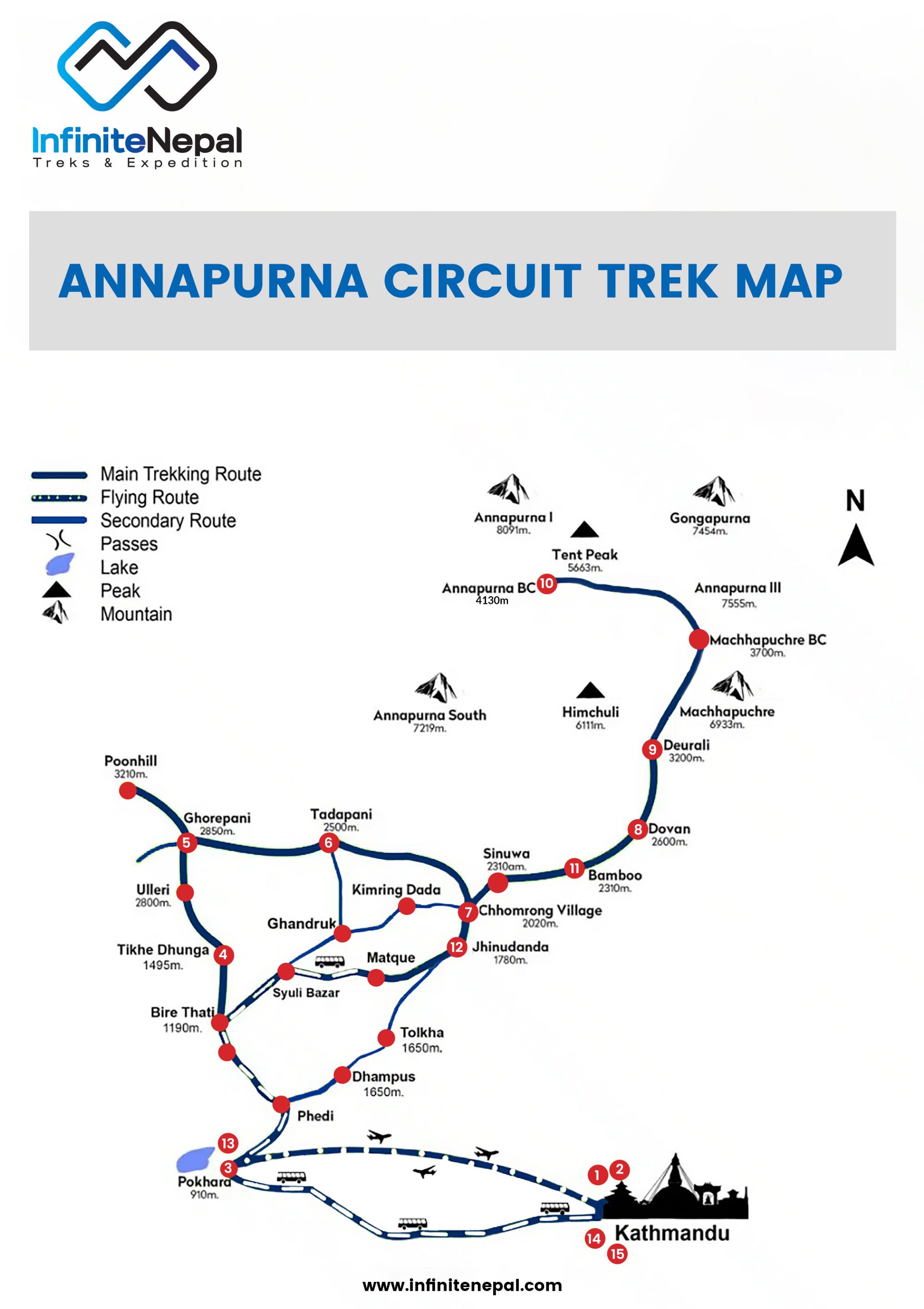
11 Days Annapurna Circuit Trek Route
The 10-day Annapurna Circuit trek starts in Besisahar, proceeds northwards to Ngawal, then heads up to the settlement of Manang for acclimatization.
The route then continues east over the high Thorong La pass at 5416 meters, descending to Muktinath Valley. It then goes south to Tatopani, known for its hot springs, before concluding by vehicle to Pokhara.
Key highlights along the circuit route include dramatic mountain scenery, Pisang Peak, Manang village, the arid Manang Valley, Thorong La pass, and Muktinath temples. The route showcases massive natural beauty and cultural sights.
Annapurna Circuit Trek Trekking Gears and Equipment
Important documents and items:
- Passport, with at least 6-month validity with two additional passport-sized photos, flight tickets.
- Photocopies of the passport and visa application
- Evidence of insurance coverage.
- Cash, in case you need cash (around $100 to $500)
- Credit cards for cash withdrawals (include photocopies of your cards), traveler’s checks, and other financial means.
- Clothing stuff that you need to pack before you begin your Everest Base Camp Trek journey:
Head:
- Headscarf or Beanie
- Lightweight hat that offers protection from the sun.
- Rechargeable Headlamp
- UV protection Sunglasses
Upper Body:
- Polypropylene shirts
- Light and expedition-weight thermal tops
- Fleece wind-stopper jacket or pullover
- Waterproof (preferably breathable fabric) shell jacket
- Down vest and jacket
- Gore-Tex jacket with hood, waterproof and breathable
Hands:
- Light inner gloves
- Outer Insulated Gloves, which are windproof and waterproof
Lower Body:
- 5-6 pairs of breathable underwear
- 1 pair of Hiking shorts
- 1 pair of Hiking trousers
- 1 pair of lightweight thermal bottoms (seasonal)
- 1 pair of fleece or woolen trousers
- warmer and weatherproof softshell pants
Feet:
- lightweight hiking boot
- lightweight and comfortable pair of hiking shoes
- 5-6 pairs of branded socks
- One pair of thermal socks.
- Gaiters(optional)
Sleeping:
- 1 sleeping bag
- Fleece sleeping bag liner (optional)
- Rucksack and Travel Bags
- 1 medium rucksack
- 1 large duffel bag
Medical:
- Small, personal first-aid kit. (simple and light)
- Aspirin, first-aid tape, and plasters (Band-Aids)
- 1 skin-blister repair kit
- Anti-diarrhea pills
- Anti-headache pills
- Cough and cold medicine
- Anti-altitude sickness pills: Diamox or Acetazolamide
- Stomach antibiotic: Ciprofloxacin, etc.
- Water purification tablets
Toiletries:
- 1 medium-sized quick-drying towel
- Toothbrush/paste
- Multipurpose soap
- Deodorants
- Nail clippers
- Face and body moisturizer
- Female hygiene products
- Small mirror
- Personal Hygiene
- Wet wipes
- Tissue /toilet roll
- Anti-bacterial handwash






Write Your Review