


Trip Information:
The epic journey to Mount Everest Base Camp is considered one of the world’s classic treks. Following in the footsteps of legendary mountaineers to the base of the tallest peak on Earth, the two-week trail has drawn daring adventurers for decades.
Rigorous physical training and mental preparation are vital to tackle the demanding high-altitude trekking. Pack proper gear like moisture-wicking clothing, down jackets, and sturdy yet broken-in boots. Also essential are permits from the Sagamartha National Park, along with travel insurance and documentation.
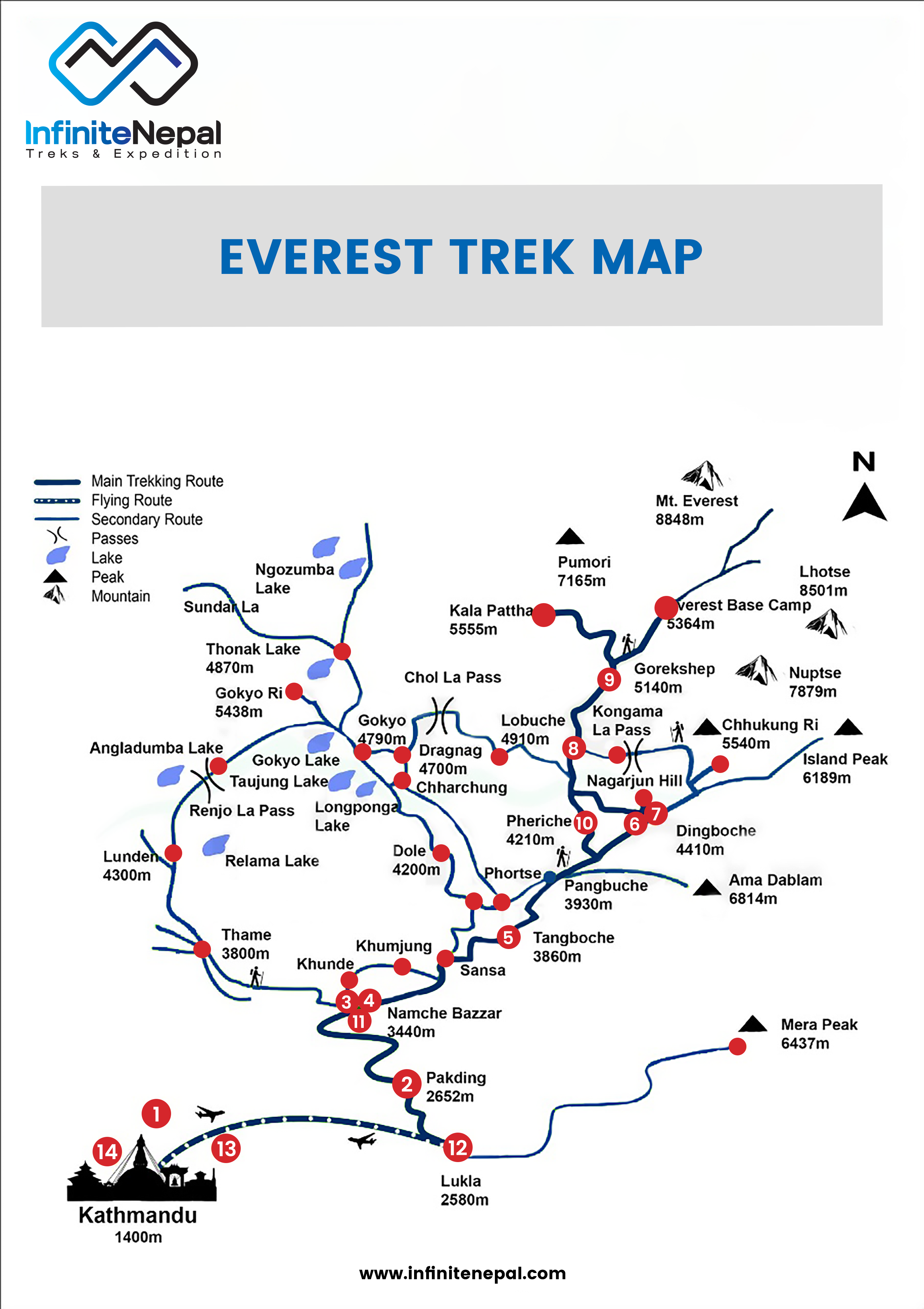
The awe-inspiring scenery attracts many to the challenge. The trail winds through the Khumbu Valley’s pine forests and suspension bridges towards icy glaciers and vast valleys, where majestic peaks pierce the heavens. Glimpses of Everest and neighbouring giants like Lhotse, Nuptse, Cho Oyu, Ama Dablam, and many more inspire you onwards.
Culturally, the trek offers insight into the lives of the Sherpa people. Prayer flags flutter over Buddhist monasteries in villages like Namche Bazaar. Visiting sites like the Tengboche Monastery provides perspective on a lifestyle set by extreme heights and environments for centuries.
Chilly temperatures, thin air, and strenuous ascents make the trek hugely demanding. Allowing proper time to acclimate to the altitude is paramount to avoid altitude sickness, which can quickly become life-threatening if ignored. Staying hydrated and dressing in breathable layers helps significantly. Communication devices, medical training, insurance and contingency plans increase the margin of safety.
With careful preparation, the journey to stand before the mighty Mount Everest is the adventure of a lifetime. The effort feels infinitely worth as the towering peak gleams red in the rising sun.
Trip Facts
Country: Nepal
Duration:14 Days
Difficulty: Strenuous
Activity: Trekking/Hiking
Max. altitude: 5,555 m/18,225 ft
Best season: Mar-May, Sep-Nov
Accommodation: Tea House & Hotel
Meals: Included
Start/End Point: Kathmandu
Everest Base Camp Trek Permits
An Everest Base Camp Trek permit is required for a successful trek. As per the New government rules, every trekker must have a permit before they begin to trek in the Conservation area or protected area inside Nepal.
Everest Base Camp is located inside the Khumbu Region, where you will pass through the Sagarmatha National Park during the trek. Therefore you must obtain these two permits while entering inside the Khumbu region. There are several places where they will check your permit, and you must show the permit. You may get fined or punished according to the Law if you fail.
Khumbu Pasang Lhamu Rural Municipality Entrance Permit
Starting October 1, 2018, a new permit was introduced, replacing the old TIMS Card. In Khumbu, the local government charges each foreigner NPR 2000. Remember, you can’t get these permits in Kathmandu. If you’re flying through Lukla, get it there. If you’re trekking from Jiri or Salleri, get it in Monjo. You can get this permit in Lukla or Monjo at the Sagarmatha National Park counter.
Sagarmatha National Park Permit
While trekking from north of Phakding, you can see the small, beautiful village named Monjo. Monjo is the first checkpoint where you need to show the permit. There are three checkpoints for the Sagarmatha National Park Permit. It is one of the important permits you must carry all the time as you enter the restricted and conservation area of the National Park. You can obtain it in Kathmandu at the Nepal Tourism Board Office or Monjo at the Park Entrance Gate.
Sagarmatha National Park Permit Cost:
Gauri Shankar Conservation Area (Optional)
If you follow the itinerary of Jiri to Everest Base Camp then you need this permit. This conservation area connects two national parks, Langtang National Park and Sagarmatha National Park. The Government of Nepal established this conservation area in January 2010 to protect various flora and fauna. This permit will cost NPR 2000 per person plus 13% VAT for 30 days. You can get this permit in Shivalaya at the Conservation Area Permit Checkpoint or the Tourist Service Center in Kathmandu.
How to grab this permit
Food During Everest Base Camp Trek
If you are trekking for the first time in the Everest Region and want to know what kind of food is available during the trek? You have a variety of options from local to international cuisine. The cost of the food budget can range from $20 to $40 per day.
You will get three daily meals during the trek: breakfast, lunch, and dinner. You need to walk an average of 6-7 hours daily, which will lose your calories. Therefore fresh and nutritious food is required to gain the energy level well. Depending upon the trekking agency the food they provide might be different.
For breakfast
For lunch and dinner
Types of Tea available on the EBC Trek
Traditional Sherpa food
Accommodation in Kathmandu
Your journey to the Everest Base Camp Begins after you land in the Kathmandu airport. A diverse range of accommodations can be found in the city, from 3-star to 5-star hotels. Depending on your budget, you can find a cheap Luxury one here.
Finding accommodation is easier inside Kathmandu. Durbarmarg, Thamel, and Baudha are popular tourist areas for hotels that are near Kathmandu airport. Numerous restaurants, pubs, and cafes offer national to international food, drinks, and cuisine.
Also, if you like a peaceful environment, you can choose the resort to stay. There are enough resorts near the city. If you want unique and stylish accommodations with personalized services, then you can try Boutique Hotels. The hotel’s price can be as low as 10$ per night to higher than 300$.
Accommodation in Teahouse
Accommodation facilities that are provided in the high-altitude areas are known as tea houses. Tea houses play a significant role in helping the trekkers to make the trek successful. Tea houses not only provide the accommodation facility to the trekkers but also you can get the chance to learn about the sherpa life. Compared to the hotel, tea houses are considered basic as it is difficult to take things to a higher altitude due to transportation problems.
Tea houses in remote areas often have basic amenities: twin beds with foam pads, a pillow, and a blanket. Rooms may have an overhead light and a window, with a personal lock and key. Cleanliness isn’t guaranteed for shared beds.
Bringing a sleeping bag for warmth and earplugs for a restful night’s sleep is recommended. Single rooms can be requested, but sharing may be necessary during crowded times due to limited space.
Tea houses have a shared dining area with a central wood-burning stove—a great place to meet others, share stories, and enjoy tea while watching mountain sunsets.
Tea houses may have Western or traditional squat toilets, which are more common at higher elevations. Bring sufficient toilet paper and keep hand sanitizer handy. Showers are often only at lower elevations, and hot water isn’t guaranteed. Wet wipes can be a useful alternative. Tea houses offer electricity, Wi-Fi, and meals, but prices vary and tend to be higher at higher altitudes.
Everest Base Camp Trek Difficulty
Although the Everest Base Camp Trek is strenuous, it is easy with the right preparation and plan. The Everest base camp trek takes you to a higher altitude of 5,555 m/18,225 ft.
So, there is a high chance of altitude sickness. Trekkers must be aware of altitude sickness, its symptoms, and prevention. If altitude sickness isn’t treated promptly, it can be dangerous and, in some cases, may even lead to death.
Altitude sickness symptoms
Preventive measures:
Further, you must walk daily for 6-7 hours, which is physically challenging. Trekkers need to maintain good stamina before they start to trek. Also, the weather is unpredictable, and it can change over time. The bad weather makes the trekking difficult. Trekkers need to prepare in advance and know about the weather conditions before they begin to trek.
Physical Requirement for the EBC Trek
You don’t need to be a super athlete, but being reasonably fit and healthy for trekking in the Himalayas is important. Some agencies say anyone can do it with determination, but it’s better to be prepared. High altitudes pose a genuine risk of altitude sickness. If you’re not physically ready, you might have to stop the adventure, even if you really want to enjoy the beauty of the Himalayas.
Preparing for Everest Base Camp involves a mix of training. First off, aerobic conditioning helps your body get used to working hard with less oxygen. It’s like teaching your body to handle the challenge of breathing in thinner air. Then, there’s elevation training, strengthening your muscles to cope with going to higher places. It’s like practicing to climb and endure elevation gains.
Lastly, there’s strength endurance training, focusing on building up your muscles’ stamina for the long journey. While you can’t replicate the extreme altitude of Everest Base Camp, these exercises aim to ready your body for the unique demands you’ll face during the trek.
Everest Base Camp Trek is successfully submitted by the young to the old age people with a strong determination for adventure. If you plan well, train well, and prepare well, you can easily overcome obstacles during the trek.
Best Time for Everest Base Camp Trek
Everest base camp is possible throughout the whole year, but we consider these factors: rainfall, temperatures, winds, and snowfall before we begin. While considering these factors, the best time for the Everest Base Camp is during Pre-monsoon (February, March, April, and May) and Post-monsoon (September, October, November, and December).
Let’s discuss in detail about four seasons in Everest Bace Camp Trek:
Spring seasons(March-May): The weather condition is mild during the daytime and at night time it is cold. Daytime temperatures hover around 15 degrees Celsius, while nighttime temperatures plummet to -14 degrees Celsius at altitudes exceeding 4000 meters. During these months, we can expect the sun to shine for an average of 7 hours per day. The wind speed is average during this month.
During the spring season, the blossom of the rhododendron flower through the forest makes the trail path beautiful. The perfect weather conditions make a fantastic view of the mountain peaks like Mt Makalu, Mt. Everest, Mt. Ama Dablam, Mt. Cho oyu, and more.
Climbing season means many other climbing groups can be seen in the trail path and tea house. You can get the chance to meet new friends, which can add joy to your journey. Also, due to the month’s overcrowding, you should book early.
Autumn (September-November): It is another wonderful month for the Everest Base Camp Climbing. The average temperature during the daytime is around 17°C, and at night it is -8℃. During these months, we can expect the sun to shine for 6-7 hours daily. The wind speed is average during this month.
During Autumn, the sky is clear, and the clear visibility makes the perfect view of the mountains. The month of Autumn is the month of festivals in Nepal. Autumn is a season of grand celebrations, bringing vibrant festivals like Dashain, Tihar, Mani Rimdu, Chhath Parva, Yomari Punhi, and many more, each adding its own cultural charm and significance. During this month, you will not see majestic views, but you can enjoy the culture and traditions of the Nepalese people.
Winter (December-February): This month’s weather can swing from cold and frosty to warm and sunny. The average temperature during the daytime is around 4 degrees Celsius, and at night and morning, it can be below -15 degrees Celsius. The temperature is bearable at the lower altitude, but at the higher altitude, due to the heavy snowfall, it isn’t easy. The side trek during the EBC with Everest Base Camp Cho La Pass is not recommended during this month.
During this month, it is extremely important to be careful while trekking. Trekkers must understand weather conditions and should trek only with the right gear and equipment. Trekking this month is best to capture photographs of the surrounding landscape and mountains. You can find fewer visitors on the trail path and in tea houses, which lowers the trekking cost during these months.
Summer (June-August): We can expect more rainfall during this month. The average temperature this month in the daytime is around 17 degrees Celsius, and the night time is around 1-2 degrees Celsius. The atmospheric conditions fluctuate unpredictably as a result of intermittent rainfall.
During this month, you need to pack warm and waterproof clothes while trekking. If you’re in lower areas, there might be bugs and mosquitoes, so bring bug spray. Watch your step because the path could be slippery from rain. It’s safer to walk with others or a guide.
Everest Base Camp Trek Trekking Gears and Equipment
Clothing stuff that you need to pack before you begin your Everest Base Camp Trek journey:
Head:
Upper Body:
Hands:
Lower Body:
Feet:
Medical:
Toiletries:

15 Days


Write Your Review