


Mera Peak (6461m) is one of the most noteworthy allowed top moving in Nepal. This pinnacle is situated in the eastern side of Khumbu or Everest region. Mera Peak trek courses schedule experiences the woods brimming with pine trees and rhododendrons in Hinkhu Valley. Mera Peak climbing and trekking is the simple crest for making the summit. Mera Peak offers probably the most shocking mountain view, flawless woodland, untamed life and high height moving on the planet. The rising of Mera top is actually direct, be that as it may, the overwhelming snow and the labyrinth of precipices can make the route longer to the summit.
The primary climb of Mera Peak was made by Col. Jimmy Roberts and Sen Tenzing on 20 May 1953 however it is trusted that the locale was first investigated broadly by British undertakings in the mid 50’s. The most compensating part of the trek to Mera Crest is that you will get an opportunity to wander into little-visited and so far untainted zones in the locale, where the slopes are still thickly forested. Moreover, amid the pinnacle climbing, one can have a chance to investigate the rich Sherpa culture their custom in the Hinku valley.
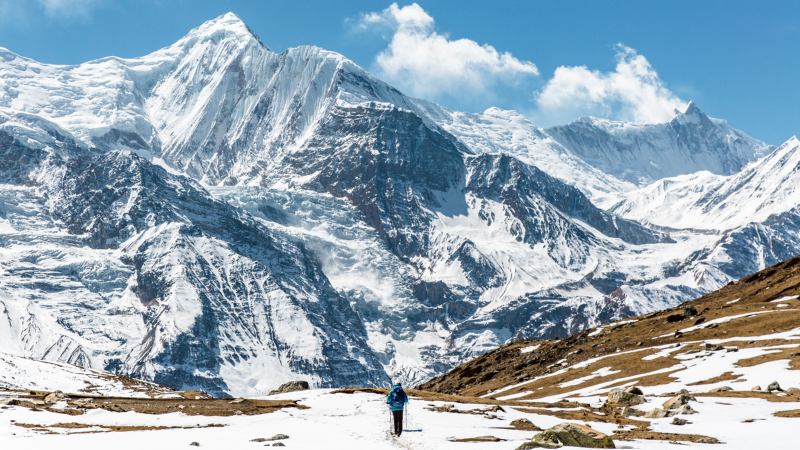
The scene from the Mera Peak makes you amazed with the magnificant kingdom of the Himalayas, a kingdom where quietness mixes with the panoramic views. The amazing perspective on the five eight-thousanders (Mt. Everest, Mt. Lhotse, Mt. Cho Oyu, Mt. Manaslu and Mt. Kanchenjunga) create your unforgatable memory during your expedition.
Mera Peak(6476m) is located in the Lower region of Solukhumbu, South face of the Mt. Everest. There are three summits of Mera Peak: south (6,065 m), Central (6,461 m) and North (6,476 m).
You will pass through the Phaplu, which is lies in the Makalu Barun National Park. You will get a chance to explore rich Sherpa culture and lifestyle at towns like Phaplu, Taksindu, Nunthala, and Kharikhola. There are lots of Gumbas, the popular one is Chiwang Monastery, where you can get positive vibes and imperativeness. The trek takes you the different passes like Taksindu Pass, Mera La Pass and Zatra Pass.
The best time for the climbing is in the mid of spring (March-May) and harvest time (September-November). Mera Peak is a trekking crest, which means you won’t require high encounters of hiking; anyway physical and mental wellness is an absolute necessity. The accomplished aides and Sherpas of Expedition will lead you and give their best for your wellbeing and security. Climbing Mera Peak will be an undertaking and a sweet memory for a lifetime. In this way, agree to accept the bundle arranged for you.
Duration: 14 Days
Region: Everest Region
Activity: Peak Climbing
Max. Altitude: Mera Peak (6,476 m / 21,246 ft)
Difficulty: Strenuous
Best season: Mar-May, Sep-Nov
Accommodation: Tea House & Hotel
Meals: B, L, D (During Trekking Days)
To climb Mera Peak, you need to obtain climbing permits from the Nepal Mountaineering Association (NMA). Permit costs vary by season:
The Mera Peak climbing route crosses between Sagarmatha National Park and Makalu Barun National Park. An entry permit for Makalu Barun is required:
So both the NMA climbing permit plus the Makalu Barun entry permit are mandatory for completing the Mera Peak Climbing. Permit costs should be budgeted into the total trip expenses. The trekking agency will generally assist with securing these permits on your behalf.
At lower elevations and while at lodges during the trek approaching Mera Peak, fairly standard trekking fare is served. This includes items like noodles, pasta, potatoes, fried rice, daal bhat (rice and lentils), eggs, porridge, toast or chapatis for breakfast. Light snacks like biscuits, popcorn, or crackers are also commonly available.
However, once climbers reach higher elevations and make camp rather than staying in tea houses, the food situation becomes more challenging. Basic camp meals largely feature dishes that are easy to transport and prepare in a small camp kitchen.
So expect fairly repetitive meals dominated by items like instant noodles, freeze-dried meals, canned meat/fish, crackers with cheese or peanut butter, cereals/granola, and plenty of sugary drinks.
Above the Khare base camp and higher up towards the summit, the food is prepared by our cooking guide during the stay in the tent. High altitude reduces appetite anyway, so being able to adequately hydrate by melting snow for water and keep bodies fueled with sugars, carbs, and salts becomes the priority.
Making it to the Mera summit requires being prepared for fairly bland, repetitive dining options, especially once entering high camp areas. Though lower elevation lodges offer standard mountain cuisine, as you ascend towards the peak itself, energizing nutritional functionality overtakes foodie pleasures or culinary variety.
The accommodation during a Mera Peak climbing trek in Nepal varies throughout the journey. Here are some details about the accommodation provided during a Mera Peak climbing journey:
The accommodation is basic but suitable for a challenging high-altitude trek like Mera Peak. Comfort is limited, but the dramatic scenery and sense of adventure make it a worthwhile experience.
The best time for Mera Peak climbing is the Spring season, from March to May, and the Autumn Season, from September to November. Here are more details on the optimal timing for Mera Peak climbs across the different seasons:
The spring months from March to May are considered the prime season for Mera Peak Climbing. During this period, average temperatures range between about 5°C overnight up to 15°C in the daytime. The temperature can decrease up to -30°C in higher elevations such as the Mera High Camp and the summit.
While days tend to be sunny, afternoons can become a bit cloudier with some light snowfall at higher elevations.
In contrast, the summer months of June through August bring much warmer days but the weather becomes far more unpredictable on Mera Peak. Overnight lows drop to about 5°C but then daytime highs frequently spike up to 15°C.
More significantly, intense thunderstorms often build in the afternoons, bringing bouts of heavy rain or dense snowfall. As a result of these erratic conditions, just 60% of the roughly 100 summiteers succeed in reaching the top each summer.
During the autumn climbing season between September to November, temperatures cool off considerably from the summer months. Overnight lows descend to about 6°C to 8°C (below 4000 m altitude), while days are generally sunny and clear, reaching 12°C.
Finally, the frigid winter months of December through February pose the most extreme Mera Peak conditions. Temperatures regularly drop below -20°C overnight in lower elevations and may struggle to get above 0°C even during daylight hours.
On the other hand, the temperature drops to – 30°C at higher elevations. Fierce winds and dangerously cold wind chills bombard the mountain frequently. Hence, less than 100 very advanced climbers equipped for the unrelenting challenges of winter alpine environments attempt Mera each season.
Mera Peak is one of the easiest and most popular trekking peaks in Nepal. glaciers to navigate. However, the Mera Peak Climbing is graded as difficult based on alpine grade standards because of altitude. At 6,476 meters or 21,247 feet high, it is a good introduction to high-altitude climbing for people with basic mountaineering experience.
The climb itself is not technically difficult. There are no tricky rock sections or glaciers to navigate. However, the altitude presents the main challenge. Trekking for days to reach Mera Peak allows time for proper acclimatization to the thin air. Still, climbers will feel the effects of altitude. Walking uphill and carrying a heavy pack will be tiring. Breathing is more labored at high elevations.
With a competent guide, proper pacing, and gradual ascent, Mera Peak is achievable for fit climbers accustomed to long hikes with steep ascents. Proper acclimatization, hydration, nutrition, and rest help summit success. Caution is needed for safe descent. Experience with crampons and ice axes is recommended.
So in summary, Mera Peak is rated moderate to difficult due to the high altitude, not technical climbing difficulty. With realistic preparation and expectations, it can be an amazing Himalayan experience! Let us help you plan an unforgettable Mera Peak adventure!
Mera Peak is a demanding trek requiring good fitness and endurance. Past experience with multi-day hikes carrying a heavy backpack is essential.
Good heart and lung capacity are key to handling the hard work of trekking 5-6 hours daily at high elevations. Aerobic exercises like jogging, cycling, and stair climbing help build needed endurance before the trek.
Strong legs and core make steep ascents and descents easier while carrying your pack. Focus on leg toning exercises like squats, lunges, and core work like planks in your training.
Efficient use of oxygen is critical in the thin air. Swimming and high-intensity interval training can boost lung power and stamina.
Arrive well-rested and injury-free. Avoid overdoing training close to the trek. Allow time to recover from any sprains or muscle injuries beforehand.
Our schedule includes acclimatization days to help adjust to the altitude. Stay hydrated, eat energy-rich foods, and listen to your body.
With proper conditioning and a determined attitude, Mera Peak is an achievable goal! Our experienced guides support you on this challenging and rewarding Himalayan adventure.
Acclimatizing to high altitude is crucial when climbing Mera Peak. The summit sits at 6,476m or 21,247ft where the air is very thin. Without proper acclimatization, you are at risk of altitude sickness.
Our trek itinerary allows time to gradually adjust to the elevations. We start low and hike to higher camps over multiple days. This gives your body time to adapt.
When we gain altitude, we may experience symptoms like headaches, nausea, dizziness, and fatigue. This is normal initially. We take it slow, rest often, stay hydrated, and limit exertion to acclimate.
We climb high and sleep low. Hiking to higher elevations and then descending to lower camps helps the acclimatization process. We also include a rest day at Khare to allow the body to recover.
Proper pacing, nutrition, and rest are key. Listen to your body and our experienced guides. If symptoms persist or worsen, descending may be required for safety.
With gradual ascent, patience, and support, you can acclimatize successfully. We want you to be healthy and strong to enjoy the incredible views from the summit of Mera Peak!
Head:

Write Your Review